Filter topics
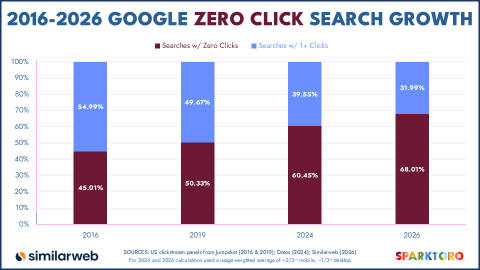
SparkToro's latest data shows zero-click searches hit 68% in early 2026, driven primarily by Google's AI Overviews and other on-results features, not AI Mode—signaling that SEO now earns visibility for AI systems to quote rather than direct traffic.
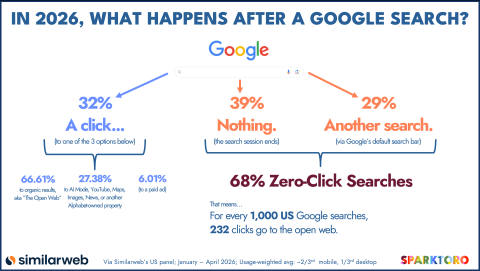
Zero-click searches on Google have surged to 68% in early 2026—up from 60% in 2024—driven primarily by AI Overviews and Google's push to keep users within its ecosystem.
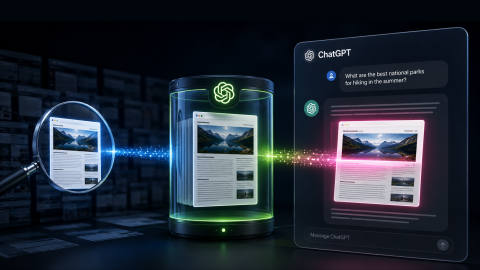
RESONEO's analysis of 1,200 ChatGPT answers reveals three distinct retrieval layers—OpenAI's own index (labrador), cached Google results, and live-fetched pages—each with different staleness and citation rules.
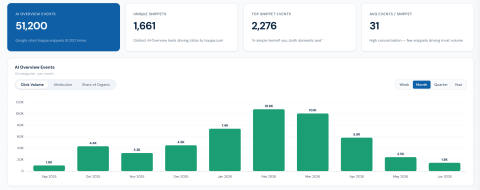
A nine-month analysis of 51,000+ AI Overview events reveals that 22.4% of that traffic is misattributed to Direct in GA4, AI Overview prominence is volatile, and Google favors structured, specific content.
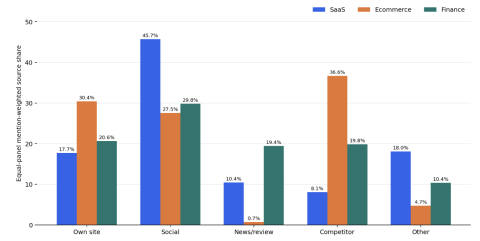
Aleyda Solis's analysis of 15 leading brands shows AI search relies on external sources for 70–82% of top citations, making digital PR and social presence as critical as owned-site content.
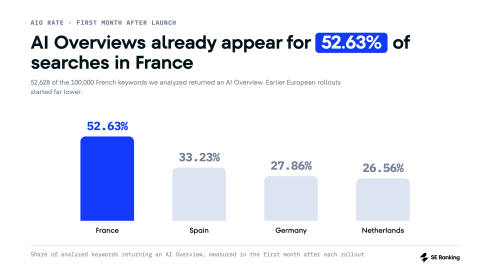
SE Ranking's analysis of 100,000 French searches shows AI Overviews appearing on over half of queries, with YouTube and Facebook among the top cited sources.
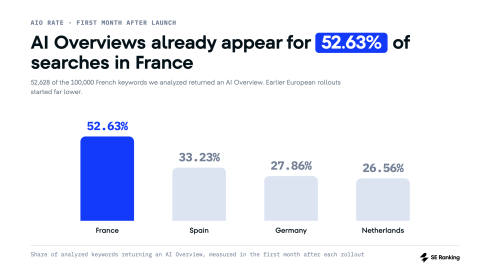
SEOFOMO News found AI Overviews appearing on over half of French search queries, with social platforms among the most-cited sources.
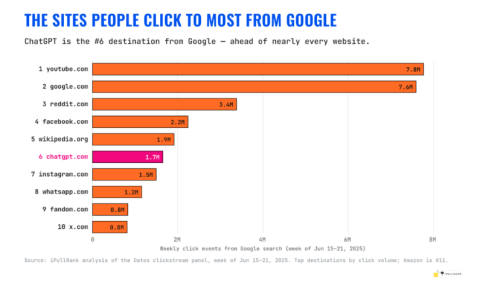
iPullRank's analysis of 13.1 billion searches shows ChatGPT receives more paid clicks from Google than any other top destination, suggesting paid search is becoming a key channel between Google and AI tools.
Fractl's analysis of AI model brand recall found that traditional SEO authority doesn't guarantee visibility in LLM answers—third-party coverage and category alignment matter more.
Analysis of over 331,000 pages shows Google ranks AI-generated content successfully when quality is high, not based on AI origin alone.
Ahrefs analyzed 331,000 ranking pages and found that 5.3% of top-3 results are fully AI-generated, suggesting Google penalizes poor content quality regardless of origin, not AI use itself.

A landscaping-focused agency tested whether adding LocalBusiness schema markup boosts rankings in a controlled 10-week study across 29 clients and multiple search engines.

An audit of 71 Canadian businesses found that AI search systems can verify only 16% of business identity on average, due to technical and structural gaps most businesses can fix.
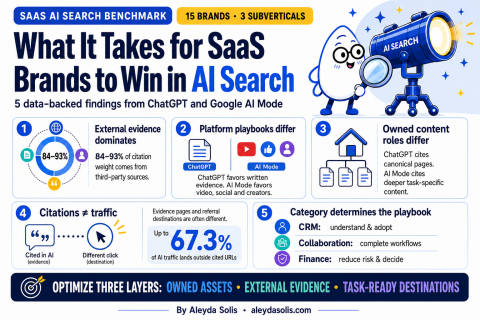
SaaS brands earn 84–93% of AI search citations from third-party sources, with ChatGPT and AI Mode relying on fundamentally different evidence ecosystems requiring separate distribution strategies.
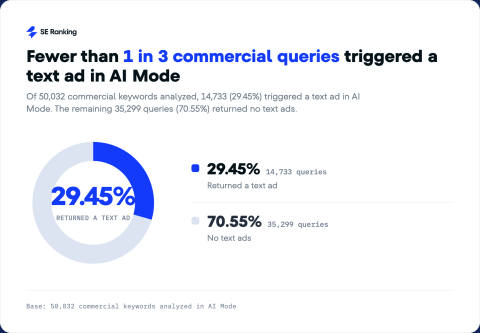
SE Ranking's analysis of 50,000+ keywords reveals ads appear in nearly one-third of commercial AI Mode queries, with no link between ad spend and organic citation likelihood.

Similarweb's new study provides evidence that AI recommendations increase direct website visits and branded search volume for recommended brands.
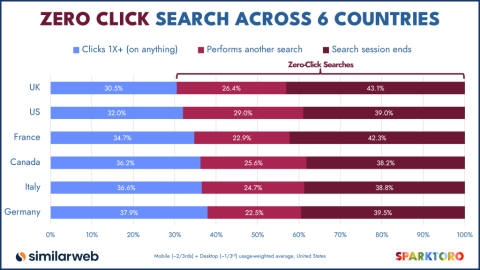
SparkToro and Similarweb found zero-click search rates range from 30.5% in Germany to 69.5% in the UK, suggesting EU regulations and cultural factors shape how searchers interact with Google.
SparkToro's research shows developers rely more on Claude and niche AI tools than Google, trust GitHub over LinkedIn, and are primarily searching for career and compensation info—not technical solutions.
A Fractl and SparkToro study finds niche publishers with minimal traffic drive 1.7x higher audience affinity than mainstream outlets, reshaping how digital PR teams should prioritize media placements in the AI era.
Moz released a dataset of 50,000 fan-out prompts across 1,000 subtopics, revealing that brand mentions cluster in entity and comparison queries, and that most fan-outs balance topical relevance with diversity.
Ahrefs analyzed 422,000+ websites' Google Search Console data and found median whole-site organic CTR typically ranges 1–2%, with significant variation by industry, domain authority, and site size.
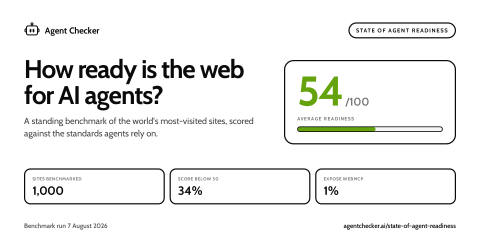
SEOFOMO News benchmarked 1,000 top websites on AI-agent readiness and found most are unprepared, with an average score of 54/100 and over a third falling below 50.
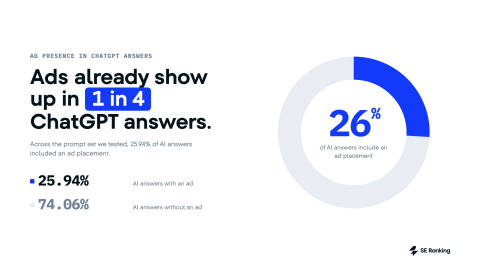
SE Ranking's analysis of 50,000+ prompts shows ChatGPT displays ads on roughly one in four commercial queries, with over 14% appearing for irrelevant topics.
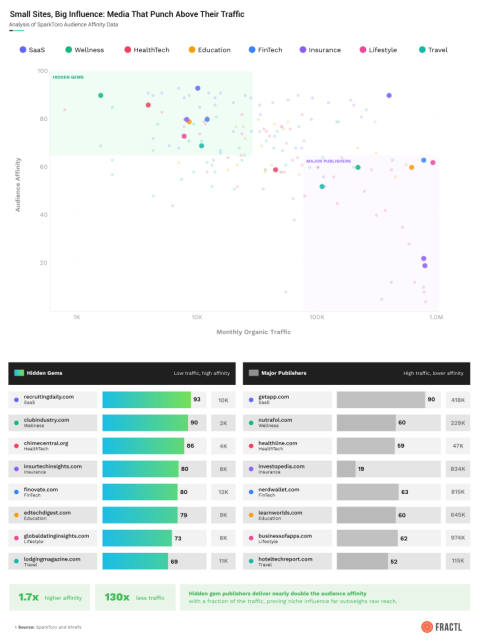
SparkToro and Fractl's analysis reveals that niche publishers with modest traffic deliver 1.7x higher audience affinity than mainstream outlets, making them more valuable for reaching qualified buyers.
Research from Meltwater and LinkedIn analyzing 9.5 million citations found that individual profiles drive three-quarters of all LinkedIn citations in AI systems.
Ahrefs released monthly organic traffic benchmarks across 26 industries, showing News leads with 102K median monthly clicks while benchmarks vary dramatically by domain authority and site size.

Semrush found only 15% of ChatGPT topic categories have clear brand owners, and traditional SEO metrics poorly predict which brands dominate AI search results.
A TikTok-WARC study finds that AI-driven marketing performs better when informed by cultural insights rather than raw output volume.
Lenny's Newsletter's 2026 tech worker survey finds the workforce bifurcating into those energized by AI (49%) and those destabilized by it (19%), with overall burnout jumping 11 points year-over-year.
Lenny's Newsletter's annual Tech Worker Sentiment Survey finds the tech workforce nearly evenly split between those thriving with AI and those struggling, with burnout jumping 11 points year-over-year.