Filter topics
Alex Lieberman walks through his Claude-powered content system that uses AI personas, voice guides, and feedback loops to eliminate writer's block and scale consistent output.
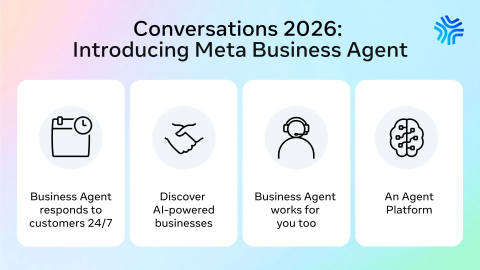
Meta launched Business Agents—enterprise-grade AI systems that handle sales, support, and lead generation directly within WhatsApp, Messenger, and Instagram DM.
X is beta-testing Grok integration in Ads Manager to let advertisers get AI-powered guidance on campaigns, moving toward eventual full automation.

Apple has updated its Maps Ads policies to prohibit home service businesses, bail bonds, crypto ATMs, and certain medical services from advertising on the platform.
Google's Gary Illyes says sites are better off omitting lastmod dates in XML sitemaps entirely if those dates are incorrect or unreliable.
Google Images is redesigning its interface with a Pinterest-like gallery layout, AI generation capabilities, and a new collections feature for saving images.
Google has published a new resource explaining how content from social and video platforms performs in its search results.
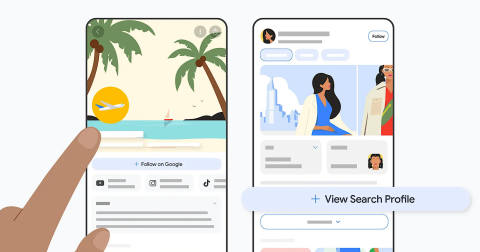
Google now offers eligible creators a customizable Search profile page to showcase articles, social posts, and followers.

Shoppers are open to AI helping them decide what to purchase but remain hesitant to let AI complete transactions autonomously.
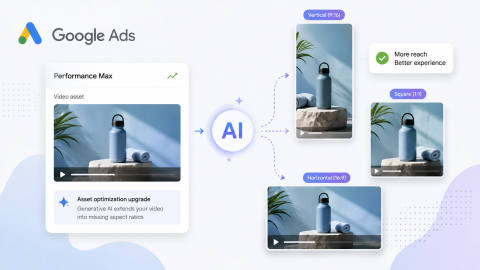
Google is automating aspect ratio generation for Performance Max video ads using AI to fill missing creative formats.
Google explicitly warns Shopify merchants not to uninstall and reinstall the Google & YouTube app, as the Content API to Merchant API migration will happen automatically by August 18.

ChatGPT users may see ads from different advertisers flickering during load, likely due to an ad server glitch.

Google will support the HTTP QUERY method once the broader web ecosystem adopts it, per Gary Illyes.
YouTube has shifted its view-counting methodology to register views at the moment a video starts playing, rather than after a predefined viewing threshold.
The Wall Street Journal reports Meta's future AI spending obligations may total nearly $700 billion—far exceeding previous disclosures.
ByteDance has partnered with the Motion Picture Association to address copyright infringement risks from AI-generated content.

Google is experimenting with a redesigned review star display in mobile sponsored results that makes ratings more prominent.

Microsoft Advertising is experimenting with larger, full-block images in Bing sponsored search results.
Google is experimenting with blue hyperlinks embedded in sponsored ad descriptions that users can click directly.
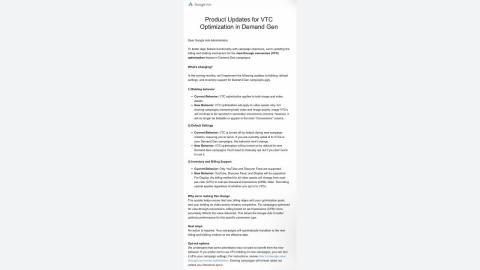
Google has refined view-through conversion tracking and billing for Demand Gen campaigns with increased emphasis on video asset optimization.
Google has lowered the subscriber and follower thresholds needed for brands and creators to get a dedicated search profile.
Google is letting users remove visible watermarks from AI-generated content while keeping invisible SynthID and C2PA metadata intact.

Google has added a dedicated reporting mechanism for owner responses to reviews that violate community standards.
Google has reduced the minimum follower count for Search Profile eligibility to 35,000 across YouTube, Instagram, and X (down from 100,000), though TikTok still requires 100,000.

Google's Merchant Center for Agencies now allows linking up to 1,000 accounts, an increase from its previously undocumented limit.

Anthropic's new watermarking feature in Claude is drawing complaints from users worried it will expose personal or professional use of the AI tool.
IBM is training and certifying thousands of consultants on OpenAI's technologies as part of a new enterprise partnership.
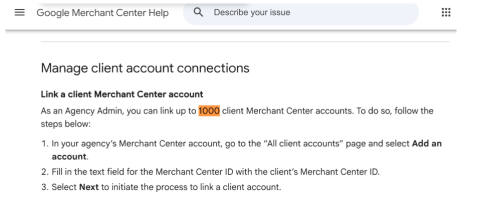
Google documented that Merchant Center for Agencies can now link up to 1,000 client accounts, clarifying a previously unspecified limit.

Google Merchant Center for Agencies now supports linking up to 1,000 client accounts, an increase from undocumented limits.
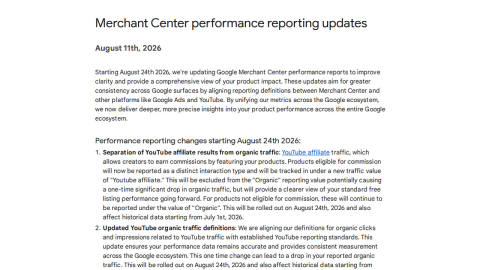
Google is unifying and clarifying Merchant Center performance reports starting August 24, 2026.

X has open-sourced its feed ranking algorithm and introduced tools letting users see if content moderation has suppressed their visibility.

Google is eliminating language targeting options from Search and Performance Max campaigns starting September 2026.
X released expanded GitHub code and a new tool letting users check whether their posts have been shadowbanned or restricted, marking another transparency push by the platform.
Google has reduced the minimum follower requirement for Search Profiles from 100,000 to 35,000 on YouTube, Instagram, and X, though TikTok remains at 100,000.
Google has updated its ad policy documentation for YouTube and Discover Feed to improve clarity and readability.
Google is rolling out four updates to Merchant Center performance reporting starting August 24, 2026, including clearer YouTube affiliate separation and expanded product-level ad reporting.
YouTube is expanding its AI chatbot feature to work across desktop, mobile, and TV with contextual response capabilities.

Google is consolidating Travel campaigns into its standard Search campaigns format.

OpenAI is experimenting with AI-generated descriptive headings displayed above ads in ChatGPT responses.
Google is testing a new mobile search layout that displays advertiser names and favicons at the top of sponsored ad groups.
Google will automatically migrate all Travel campaigns to new Search campaigns for Travel starting Q3 2026, though advertisers can transition earlier.
YouTube has doubled the watch-hour threshold for monetization eligibility to 8,000 hours annually or 20 million Shorts views per quarter.

X is discontinuing its revenue-sharing program and rolling out an Original Content Rewards Program that pays creators based on qualified impressions.

LinkedIn is adjusting its feed algorithm to prioritize relevance and rank interactions based on engagement quality rather than volume.

Jeff Dean is leaving Google after 27 years, and Demis Hassabis is stepping down as Google DeepMind CEO to become chair, with Koray Kavukcuoglu assuming many of his responsibilities.
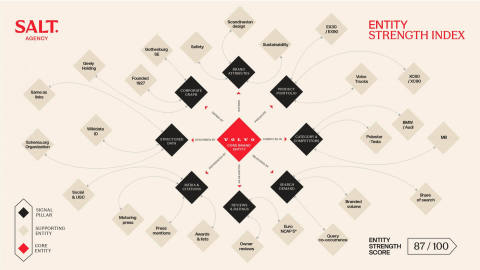
Brands without recognized Knowledge Graph entities risk being treated as generic text strings rather than established authorities in search.

OKF v0.2 now includes trust verification fields—claim origin, expiration, and attribution—though no major AI systems are reading it yet.
Google is testing anchor text links in Ads descriptions, a text disclaimer override for pinned descriptions, and a Handle Swapping feature for Search Profiles.