Filter topics
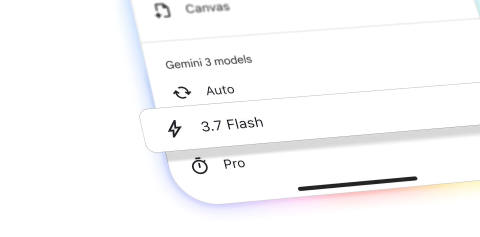
Google is rolling out its latest Gemini 3.7 Flash AI model to Search's AI Mode today for paid Pro and Ultra subscribers globally in English.
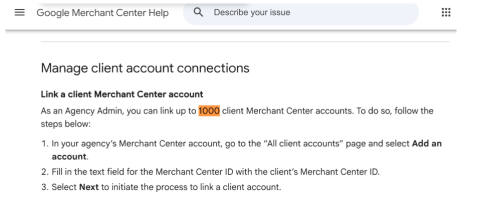
Google documented that Merchant Center for Agencies can now link up to 1,000 client accounts, clarifying a previously unspecified limit.

Google will automatically migrate legacy Search campaign features to AI Max starting September 1, with Dynamic Search Ads following in February 2027.
Google is retiring manual language targeting in Google Ads next month, automatically routing ad selection via AI instead.
Anthropic's Claude is watermarking AI-generated content, but Ahrefs' research suggests this won't meaningfully impact SEO since Google ranks AI content already.
SERoundtable's weekly recap covers Google's AI home page tests, quality concerns in AI-powered local results, and Meta's web crawling activity that may signal a new search engine project.

Google is rolling out AI-generated images directly in AI Overviews, prompting immediate criticism from content creators over replacement concerns.

Google Merchant Center for Agencies now supports linking up to 1,000 client accounts, an increase from undocumented limits.

Google's Googlebot declares itself as coming from Mountain View, California, but actually crawls from various data centers worldwide depending on regional needs.

Google has launched a reporting feature allowing users to flag owner responses to reviews for violations like profanity, harassment, discrimination, or personal information disclosure.

SparkToro's founder argues that despite declining direct traffic, websites remain essential as owned-and-controlled hubs for content distribution, AI training, and brand positioning.

SEO professionals need to understand how LLM grounding—the distinction between static training data and real-time web retrieval—affects brand visibility in AI search results.
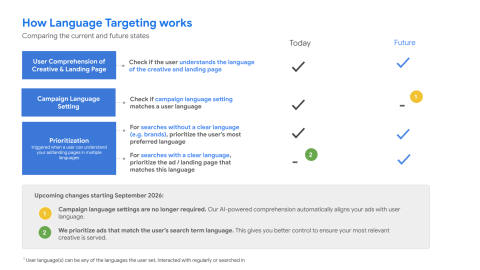
Google is removing the campaign-level language targeting setting from Search and AI Max for Search campaigns in late September, replacing it with automated language matching based on ad language and user signals.
Meta leveraged AI analysis to remove 750,000 teen accounts in Australia in compliance with the country's eSafety Commission ban on under-16 users.
X released expanded GitHub code and a new tool letting users check whether their posts have been shadowbanned or restricted, marking another transparency push by the platform.

Shopify has seen AI referrals jump 197%, but organic search still drives the majority of ecommerce traffic.
Effective link building requires looking beyond individual links to broader strategic considerations.
Google experienced a notable ranking volatility spike over August 12–13, while OpenAI began hiding ChatGPT source links behind additional clicks.
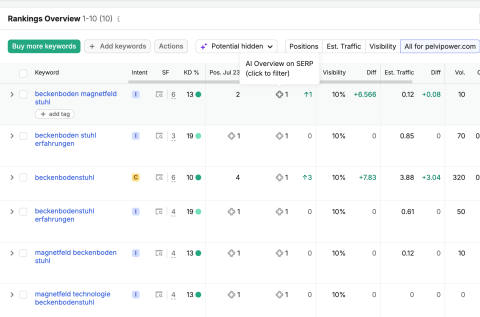
B2B organic traffic can rank well but fail to drive actual customer consideration, requiring a strategic rethink beyond click metrics.

A new study reveals AI sources drive just 1.1% of traffic to news publishers, suggesting minimal direct impact from AI traffic sources at present.
GSQi Blog explains how to identify and organize AI Mode queries using Google Search Console's performance data, APIs, and third-party tools like Analytics Edge and Claude.

Search Engine Land argues that recent SEO visibility gains attributed to AI are largely the result of brands paying off accumulated technical debt rather than benefiting from new opportunities.
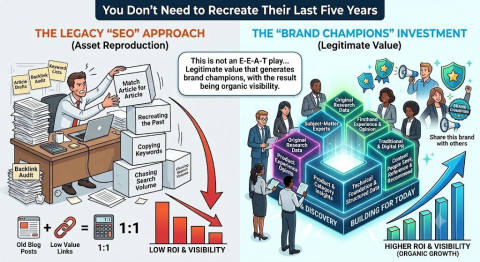
Market volatility from SEO uncertainty can help challenger brands outrank established competitors and reclaim lost organic visibility.
Tracking tools detected a notable ranking volatility spike on August 12–13, though SERoundtable reports no confirmed Google algorithm update behind the movement.
Google has reduced the minimum follower requirement for Search Profiles from 100,000 to 35,000 on YouTube, Instagram, and X, though TikTok remains at 100,000.

OpenAI is moving the ChatGPT sources button from a visible footer position to a hidden three-dot menu, potentially reducing click-through visibility to cited sources.
Misconfigured Cloudflare and CDN settings can accidentally block Google crawlers, causing sudden ranking drops and traffic loss.

Google's Search Console sometimes designates spammy sites as the canonical URL for legitimate domains, though Google says the selection typically resolves within weeks.
Meta has enhanced WhatsApp's scam detection system while maintaining the app's privacy-first architecture.

A judge has allowed a lawsuit alleging SEO sabotage through toxic backlinks to move forward, setting potential legal precedent for the industry.
Google has updated ad requirements for YouTube and Discover Feed placements.

Google has updated Merchant Center to include cross-platform reporting features for e-commerce sellers.
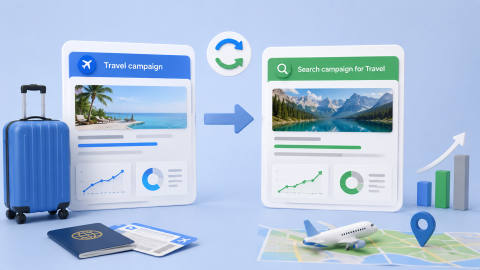
Google is consolidating Travel campaigns into its standard Search campaigns format.
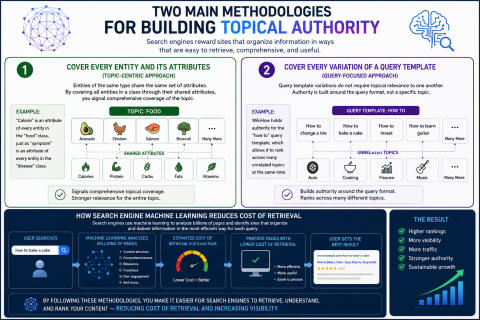
Query templates help expand topical authority by systematically covering related search queries within a subject area.
Google amended its SerpApi lawsuit to focus on licensed content protection while expanding AI Overviews to local results and rolling out several Merchant Center updates.
Google amended its lawsuit against SerpApi to emphasize protection of licensed content from partners like Reddit who explicitly restricted third-party extraction.

Google's AI Overviews for local results are frequently citing self-promotional listicles as primary sources instead of directing users to actual business websites.
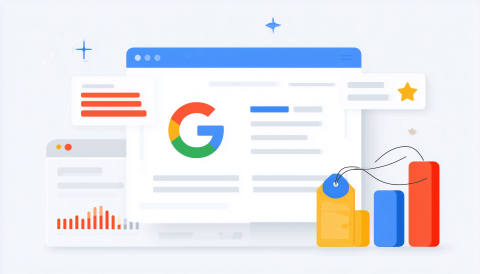
Google is revamping Merchant Center performance reports on August 24 with four updates including YouTube affiliate separation, definition alignments, expanded ads reporting, and new segmentation options.
Meta's damaged public trust may hinder its ability to execute on AI ambitions despite leadership's strategic vision.
Google has fully rolled out generative AI performance reports in Search Console and is testing new ad features including advertiser summaries and AI dashboard tools.
Google is testing a new mobile search layout that displays advertiser names and favicons at the top of sponsored ad groups.
Google will automatically migrate all Travel campaigns to new Search campaigns for Travel starting Q3 2026, though advertisers can transition earlier.
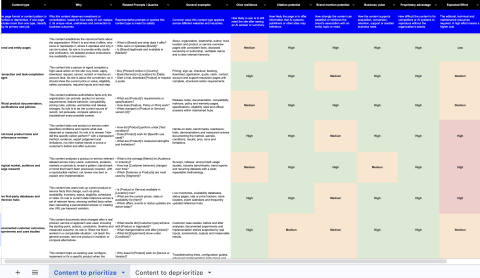
Aleyda Solis presents a content prioritization framework using six dimensions (click resilience, citation potential, brand mention potential, business value, proprietary advantage, and expected effort) to identify which content types remain valuable when AI can answer queries directly.
Moz released a dataset of 50,000 fan-out prompts across 1,000 subtopics, revealing that brand mentions cluster in entity and comparison queries, and that most fan-outs balance topical relevance with diversity.
Moz announced the first five speakers for MozCon London on November 13, 2026, with sessions covering AI search agents, topical content optimization, and agentic e-commerce.
Google is testing anchor text links in Ads descriptions, a text disclaimer override for pinned descriptions, and a Handle Swapping feature for Search Profiles.
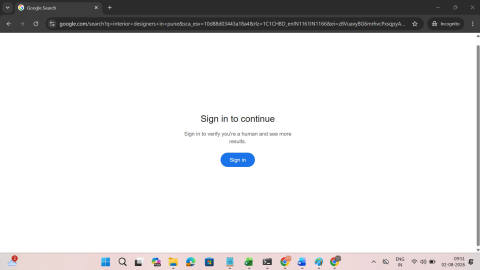
Google is testing a sign-in requirement for searchers to access additional search results, a move that could reshape how users discover and interact with organic content.
Google is testing keyword-rich hyperlinks within ad descriptions that point to the same landing page as the main ad title.