Filter topics1/12
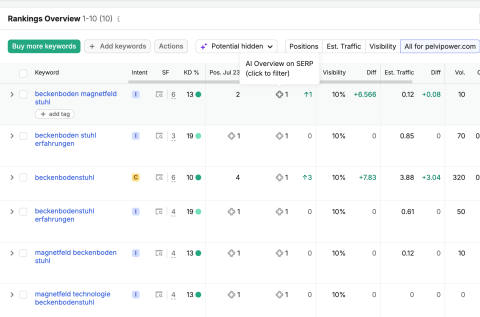
B2B organic traffic can rank well but fail to drive actual customer consideration, requiring a strategic rethink beyond click metrics.
A new study reveals AI sources drive just 1.1% of traffic to news publishers, suggesting minimal direct impact from AI traffic sources at present.
GSQi Blog explains how to identify and organize AI Mode queries using Google Search Console's performance data, APIs, and third-party tools like Analytics Edge and Claude.
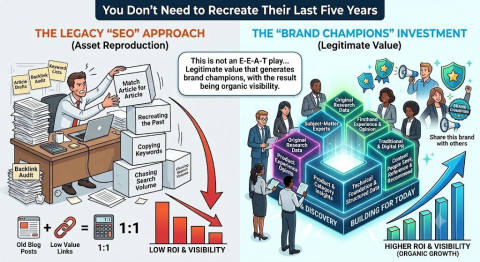
Market volatility from SEO uncertainty can help challenger brands outrank established competitors and reclaim lost organic visibility.
Tracking tools detected a notable ranking volatility spike on August 12–13, though SERoundtable reports no confirmed Google algorithm update behind the movement.
Google is revamping Merchant Center performance reports on August 24 with four updates including YouTube affiliate separation, definition alignments, expanded ads reporting, and new segmentation options.
Search Engine Land offers best practices for geo-optimized SEO strategies aimed at teams accountable to revenue targets.

SERoundtable reports noticeable ranking volatility between August 1–3, driven by an unconfirmed Google Search update that has SEOs observing widespread SERP shuffling and traffic fluctuations.

Google refreshed its Business Profile help documentation with updated guidance on identifying legitimate versus fraudulent calls and texts via WhatsApp and RCS.

Google is testing a sign-in requirement as an alternative to CAPTCHAs to verify human searchers, though the test remains unconfirmed and unreplicable by most users.
Google Analytics now includes a campaign diagnostics tool to help users troubleshoot missing aggregate identifiers in their data.
Google is testing a "Related searches based on your browsing" feature that may pull from Chrome history beyond traditional search data.
Multiple tracking tools detected a spike in Google search ranking volatility starting July 23–24, 2026, though Google has not officially confirmed an update.
Search Engine Land argues that a passive SEO approach leaves you vulnerable to competitor outranking and organic traffic loss.
Major publishers are considering blocking Google Search over declining traffic value while the EU fined Google $1B for DMA violations.

Major publishers including USA Today, Politico, Reuters, and others are seriously considering blocking Google Search entirely as traffic from the search engine continues to decline.

Publishing more content doesn't guarantee better SEO results; instead, focus on quality, indexing, crawl budget, and strategic content pruning.

Google and ChatGPT are separately testing whether moving citation cards from top to bottom of AI-generated answers affects user click behavior.

Semrush found only 15% of ChatGPT topic categories have clear brand owners, and traditional SEO metrics poorly predict which brands dominate AI search results.
Google's search leaders claim AI features drive billions of weekly clicks to websites, but Barry Schwartz notes this conflicts with data showing search traffic and CTR are actually declining.
SEO tracking tools detected ranking volatility over the July 18-19 weekend, though Google has not confirmed a new update.
Google's SVP Nick Fox claims AI Search features alone send billions of clicks weekly, contradicting widespread reports of declining organic traffic.

The EU has mandated that Google share search data with competitors beginning in 2027, a significant regulatory intervention into search market practices.
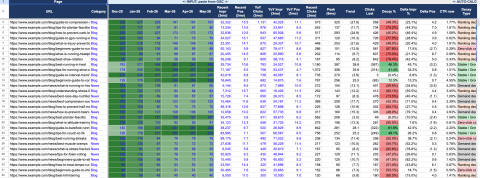
Search Engine Land breaks down four distinct types of content decay, including a new AI-driven cause, with a data-driven diagnostic method using Google Search Console.
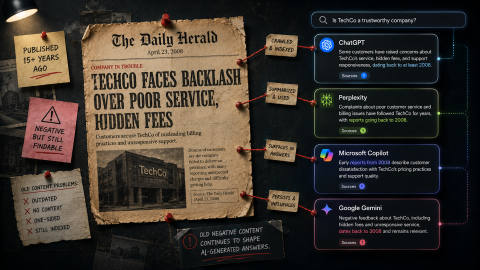
AI search engines cite old negative articles as authoritative sources, giving outdated content renewed influence and requiring brands to shift from suppression to proactive monitoring and source diversification.

SERoundtable reports potential Google Search ranking volatility around July 11, with SEO community members noting reversals in sites hit by January 2026 updates.
Reddit's AI-generated translations have significantly declined in Google search visibility and AI search platforms following the May 2026 core update and June 2026 spam update.

GatherUp is hosting a free local search webinar on April 23 featuring industry experts discussing Google My Business, reputation management, and agency strategies.

GatherUp tracked Google's month-long pause of reviews and Q&A starting March 2020 and the platform's uneven, category-by-category rollout to restore them by summer.

Similarweb's new study provides evidence that AI recommendations increase direct website visits and branded search volume for recommended brands.

Traditional SEO metrics like rankings and clicks don't translate to AI search; brands must track visibility, recommendations, and citation accuracy instead.
Ahrefs released monthly organic traffic benchmarks across 26 industries, showing News leads with 102K median monthly clicks while benchmarks vary dramatically by domain authority and site size.
Ahrefs analyzed 422,000+ websites' Google Search Console data and found median whole-site organic CTR typically ranges 1–2%, with significant variation by industry, domain authority, and site size.
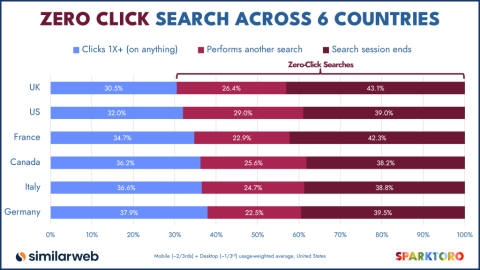
SparkToro and Similarweb found zero-click search rates range from 30.5% in Germany to 69.5% in the UK, suggesting EU regulations and cultural factors shape how searchers interact with Google.
Google's May 2026 core update, which rolled out May 21, caused significant ranking volatility across multiple verticals and geographies, exceeding the impact of March's update.
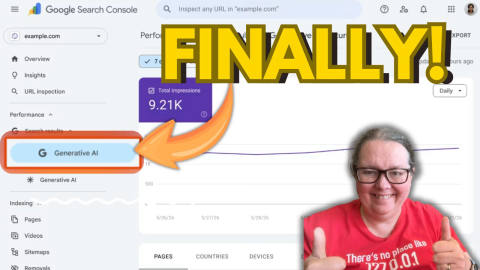
Google is rolling out a new Generative AI report in Search Console that shows impressions of your content in AI Overviews, with filtering by page, country, device, and date—helping SEOs optimize for AI-grounded responses.
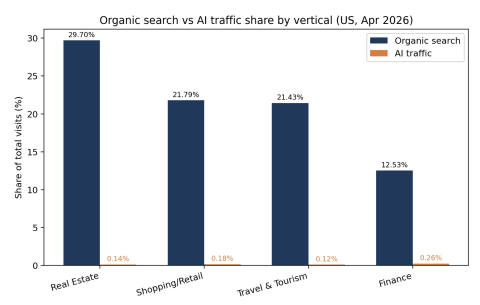
AI traffic remains tiny versus organic search, but AI citations reveal a distinct visibility layer that matters for discovery and evaluation—requiring separate measurement strategies.
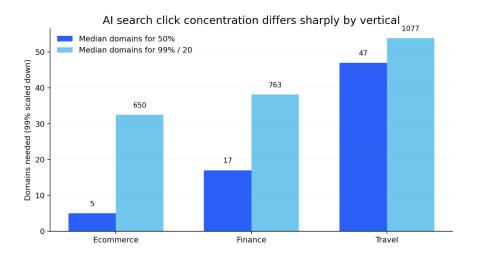
Analysis of 87.6M AI search visits across 10 markets shows local and regional domains, not global brands, often lead AI search results—fundamentally reshaping competitive dynamics by market and vertical.
A GSQi Blog case study examines a deindexing that occurred before the client received Google's formal manual action notice.
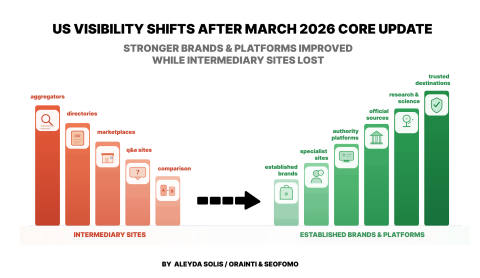
Aleyda Solis's analysis of Google's March 2026 core update reveals visibility consolidating around stronger destination brands, official sources, and dominant platforms at the expense of intermediaries and aggregators.