Filter topics1/12
Google deployed Gemini 3.5 Flash-Lite to Search, a court dismissed its scraping lawsuit against SerpApi, and Google Ads enforced new appeal deadlines and reorganized features.

Google has begun rolling out its Gemini 3.5 Flash-Lite model in Search to power faster agentic search experiences and conversational query understanding.

Google and ChatGPT are separately testing whether moving citation cards from top to bottom of AI-generated answers affects user click behavior.
Meta is being sued for allegedly using internal AI systems to identify and target specific employees for its 10% layoff.

Semrush found only 15% of ChatGPT topic categories have clear brand owners, and traditional SEO metrics poorly predict which brands dominate AI search results.

Google deployed its new Gemini 3.5 Flash-Lite model in Google Search to power faster agentic search experiences and AI features.

Search Engine Land outlines how bloggers must prioritize content clarity to remain competitive as AI search reshapes SEO in 2026.
Google made minor grammatical updates to its Performance Max help docs, with the text customization section remaining substantively unchanged.
Google's search leaders claim AI features drive billions of weekly clicks to websites, but Barry Schwartz notes this conflicts with data showing search traffic and CTR are actually declining.
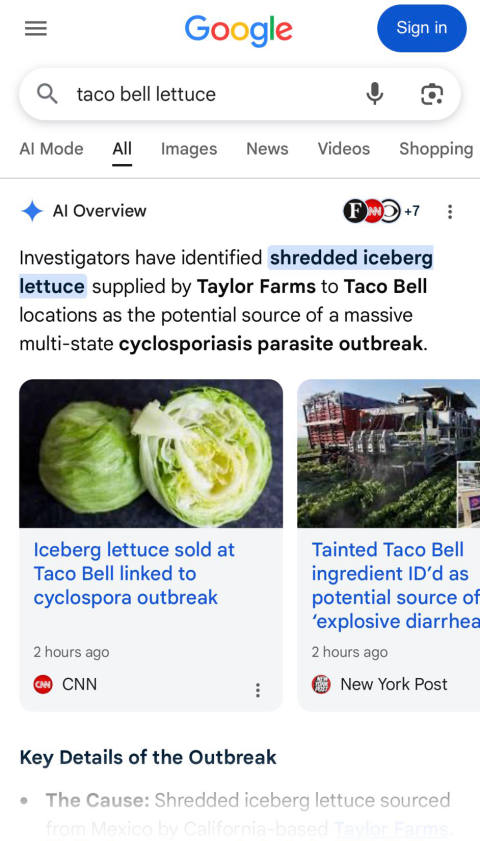
Google has fully launched news carousels and top stories within AI Overviews on mobile in the U.S., fulfilling a May commitment to highlight timely content and boost publisher visibility.
Google's SVP Nick Fox claims AI Search features alone send billions of clicks weekly, contradicting widespread reports of declining organic traffic.

AI citation building—getting your brand mentioned in AI-generated responses—is becoming essential as ChatGPT and Gemini become discovery channels for buyer journeys.
X is leveraging its Grok AI to detect and remove accounts engaging in engagement bait within its creator revenue program.
Meta rolled out parental alerts when teens discuss self-harm or suicide with its AI chatbot, with plans to expand the feature globally by year-end.

Google is rolling out app integrations in AI Mode, letting users complete shopping, design, and music tasks directly within Search results.
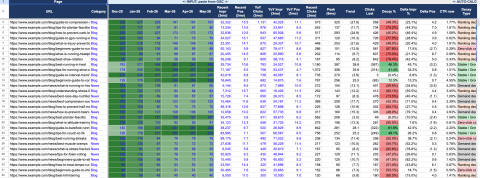
Search Engine Land breaks down four distinct types of content decay, including a new AI-driven cause, with a data-driven diagnostic method using Google Search Console.
Google's John Mueller clarifies that low-quality and AI-generated content often triggers reduced crawling and indexing, showing as 'crawled—currently not indexed' in Search Console.
Interactive tools like calculators and converters rank for high-volume searches with minimal competition and survive better against AI Overviews than traditional content.

Google citations in AI Mode search results surged 8.4x in two months, driven by Business Profiles and Product Knowledge Panels appearing inline in answers.
Google revamped Image Search with a gallery layout, added AI image generation to AI Overviews, and is testing sponsored product hiding in Shopping results.
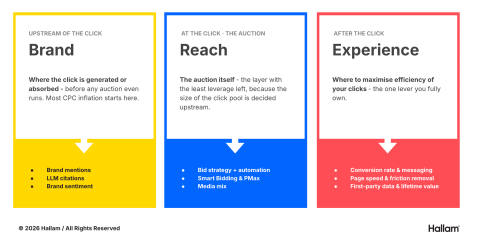
Search Engine Land argues that rising CPCs are driven more by shrinking organic clicks and AI competition before auctions begin than by auction dynamics alone.
Google redesigned its Image Search homepage to feature a dynamic, personalized gallery of images instead of a simple search box, rolling out over the coming weeks.

Google is rolling out AI image generation directly within AI Overviews, allowing users to create custom visuals from text prompts without leaving search results.
Google Images is redesigning its interface with a Pinterest-like gallery layout, AI generation capabilities, and a new collections feature for saving images.

Emarketer projects the entire U.S. chatbot ad market will reach only $5.41 billion by 2030, putting OpenAI's $100 billion revenue target vastly out of reach.
Google is rolling out image generation within AI Overviews using its Nano Banana model, potentially reducing clicks to publishers and Google Image Search.
Google Merchant Center launches an AI Performance report for AI Mode and Overviews, while Google Ads updates its alcohol, gambling, and access-removal policies.
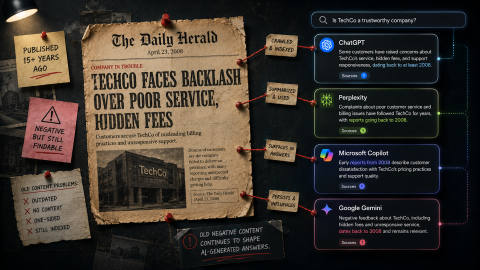
AI search engines cite old negative articles as authoritative sources, giving outdated content renewed influence and requiring brands to shift from suppression to proactive monitoring and source diversification.

OpenAI updated its crawler documentation to clarify that its user-agent string version number may change and that it uses an additional robots.txt marker when fetching robots.txt files.
X is adjusting its algorithm to prioritize posts from followed accounts after acknowledging data gaps in its recommendation system.
Meta announced a $50B Louisiana data center expansion to power AI development, but the project faces scrutiny over environmental and community impacts.
Bing's product team stated that spam penalties are enforced algorithmically across multiple violators rather than as isolated, one-off takedowns because individual cases don't scale.
Reddit's AI-generated translations have significantly declined in Google search visibility and AI search platforms following the May 2026 core update and June 2026 spam update.
Reddit has become a top SEO and AI-search visibility channel, and Ahrefs outlines a playbook for brands to build genuine presence without running afoul of community rules or algorithms.
Traditional SEO tactics built for lexical search are misaligned with AI search's actual mechanics; optimization must shift toward atomic content structure and cross-platform consideration.

Similarweb's new study provides evidence that AI recommendations increase direct website visits and branded search volume for recommended brands.
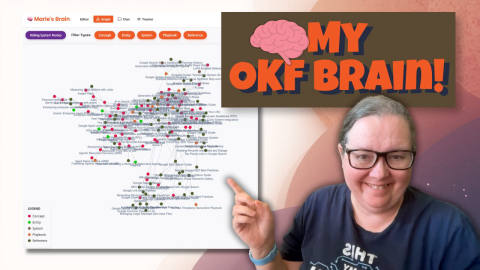
Marie Haynes shares her personal OKF system—a structured knowledge format for AI agents—demonstrating how it can automate research organization and client work.
Rejoice Ojiaku's PEE framework (Point, Evidence, Explain) simplifies AI search optimization by returning to clarity fundamentals rather than complicated new tactics.
Traditional SEO metrics like rankings and clicks don't translate to AI search; brands must track visibility, recommendations, and citation accuracy instead.
A YMYL site is being heavily cited by ChatGPT despite having zero visibility in Google organic search, suggesting AI models and search engines may be evaluating and ranking content differently.
Ahrefs identifies 10 major SEO trends for 2026, from query fan-out and AI search dominance to the declining effectiveness of pure informational content.
Marie Haynes explores how Google's Open Knowledge Format (OKF) could shift SEO focus from search engine visibility to agent-accessible knowledge management, creating demand for new specialist roles.
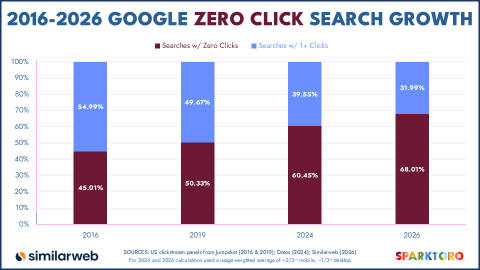
SparkToro's latest data shows zero-click searches hit 68% in early 2026, driven primarily by Google's AI Overviews and other on-results features, not AI Mode—signaling that SEO now earns visibility for AI systems to quote rather than direct traffic.
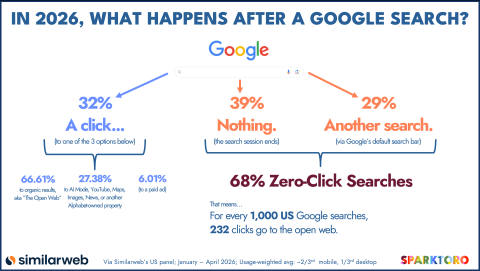
Zero-click searches on Google have surged to 68% in early 2026—up from 60% in 2024—driven primarily by AI Overviews and Google's push to keep users within its ecosystem.
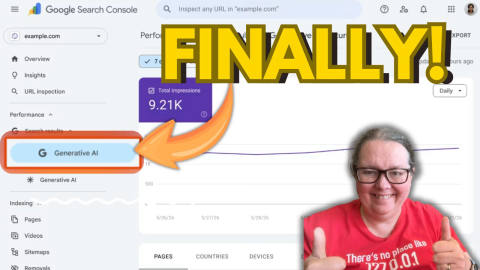
Google is rolling out a new Generative AI report in Search Console that shows impressions of your content in AI Overviews, with filtering by page, country, device, and date—helping SEOs optimize for AI-grounded responses.
Google Search Central Blog announced a new Generative AI Performance Report feature within Search Console to help publishers track how their content performs in AI-driven search experiences.
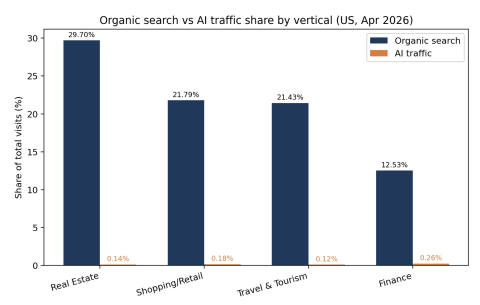
AI traffic remains tiny versus organic search, but AI citations reveal a distinct visibility layer that matters for discovery and evaluation—requiring separate measurement strategies.
GatherUp breaks down competing definitions of agentic search and explains why local reputation still matters as AI agents handle more tasks for users.