Filter topics1/12
Interactive tools like calculators and converters rank for high-volume searches with minimal competition and survive better against AI Overviews than traditional content.
Google's Gary Illyes says sites are better off omitting lastmod dates in XML sitemaps entirely if those dates are incorrect or unreliable.

Google's AI Mode ads are now displayed on close to 30% of all search queries, reflecting the company's expanding push to integrate AI-generated content into search results.
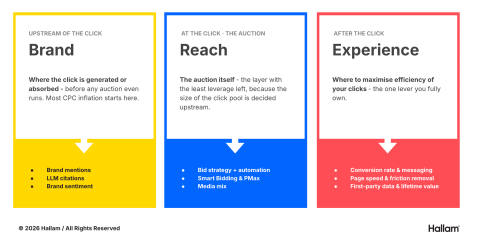
Search Engine Land argues that rising CPCs are driven more by shrinking organic clicks and AI competition before auctions begin than by auction dynamics alone.
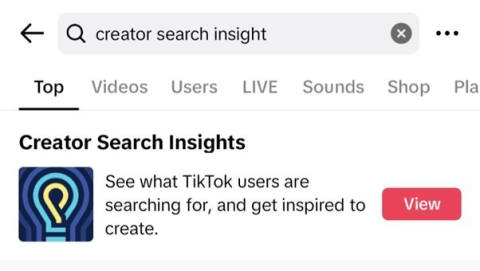
Per Search Engine Land, TikTok's recommendation engine is increasingly becoming the initial discovery point for customers, while Google shifts from discovery channel to decision validator.
Google redesigned its Image Search homepage to feature a dynamic, personalized gallery of images instead of a simple search box, rolling out over the coming weeks.

Google is rolling out AI image generation directly within AI Overviews, allowing users to create custom visuals from text prompts without leaving search results.
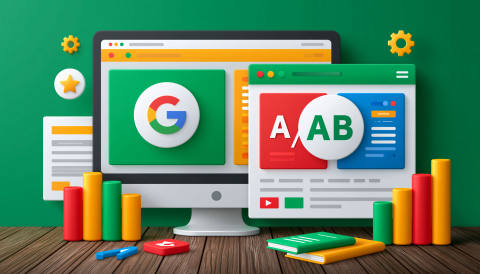
Google's John Mueller says A/B tests with significant differences between variants may show visible effects in search results and indexing.
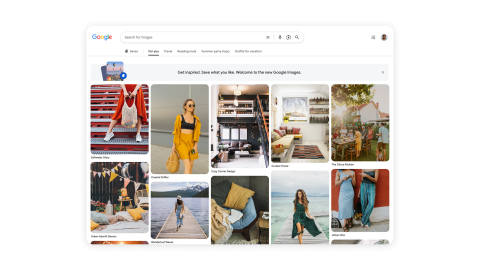
Google is rolling out a redesigned Google Image Search homepage that replaces the simple search box with a dynamic, personalized gallery of images updated in real time.
Google is rolling out image generation within AI Overviews using its Nano Banana model, potentially reducing clicks to publishers and Google Image Search.
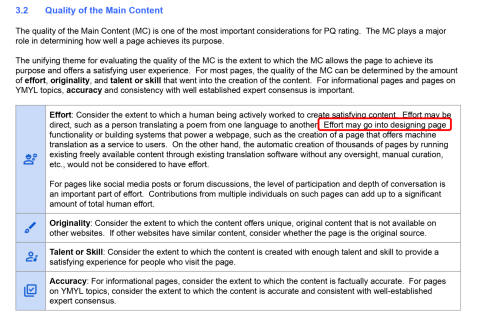
Search Engine Land examines how visual semantics complements topical authority strategies to help sites maintain and reclaim organic visibility.
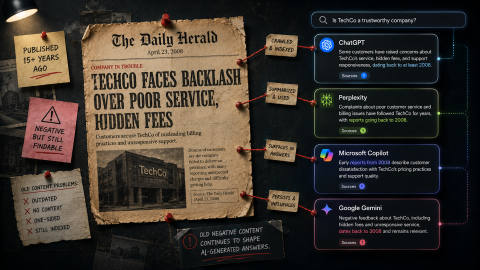
AI search engines cite old negative articles as authoritative sources, giving outdated content renewed influence and requiring brands to shift from suppression to proactive monitoring and source diversification.
SERoundtable reports potential Google Search ranking volatility around July 11, with SEO community members noting reversals in sites hit by January 2026 updates.
Bing's product team stated that spam penalties are enforced algorithmically across multiple violators rather than as isolated, one-off takedowns because individual cases don't scale.

GatherUp's local SEO webinar covered new GMB service hours and attributes, Google's spam problem in local listings, and review attribute expansions.
Google has published a new resource explaining how content from social and video platforms performs in its search results.
Reddit has become a top SEO and AI-search visibility channel, and Ahrefs outlines a playbook for brands to build genuine presence without running afoul of community rules or algorithms.

Traditional SEO tactics built for lexical search are misaligned with AI search's actual mechanics; optimization must shift toward atomic content structure and cross-platform consideration.
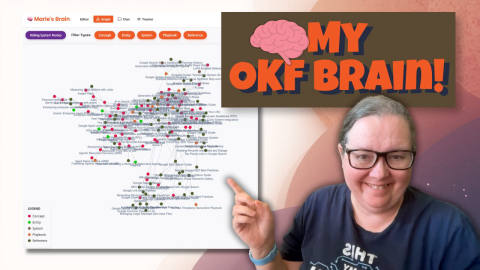
Marie Haynes shares her personal OKF system—a structured knowledge format for AI agents—demonstrating how it can automate research organization and client work.
Rejoice Ojiaku's PEE framework (Point, Evidence, Explain) simplifies AI search optimization by returning to clarity fundamentals rather than complicated new tactics.
Traditional SEO metrics like rankings and clicks don't translate to AI search; brands must track visibility, recommendations, and citation accuracy instead.
Ahrefs released monthly organic traffic benchmarks across 26 industries, showing News leads with 102K median monthly clicks while benchmarks vary dramatically by domain authority and site size.
Ahrefs analyzed 422,000+ websites' Google Search Console data and found median whole-site organic CTR typically ranges 1–2%, with significant variation by industry, domain authority, and site size.
A YMYL site is being heavily cited by ChatGPT despite having zero visibility in Google organic search, suggesting AI models and search engines may be evaluating and ranking content differently.
Ahrefs identifies 10 major SEO trends for 2026, from query fan-out and AI search dominance to the declining effectiveness of pure informational content.
Moz has announced MozCon 2026 will launch as a roadshow in London on November 13, featuring industry speakers and networking events.
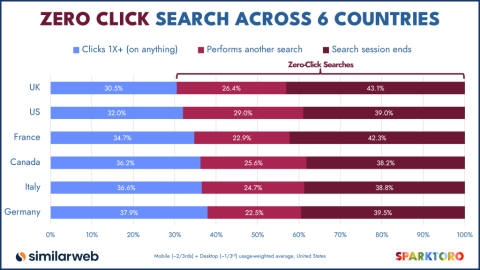
SparkToro and Similarweb found zero-click search rates range from 30.5% in Germany to 69.5% in the UK, suggesting EU regulations and cultural factors shape how searchers interact with Google.
Marie Haynes explores how Google's Open Knowledge Format (OKF) could shift SEO focus from search engine visibility to agent-accessible knowledge management, creating demand for new specialist roles.
Google's May 2026 core update, which rolled out May 21, caused significant ranking volatility across multiple verticals and geographies, exceeding the impact of March's update.
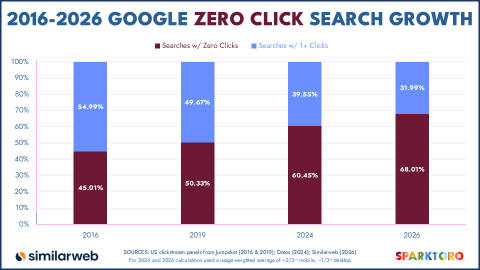
SparkToro's latest data shows zero-click searches hit 68% in early 2026, driven primarily by Google's AI Overviews and other on-results features, not AI Mode—signaling that SEO now earns visibility for AI systems to quote rather than direct traffic.
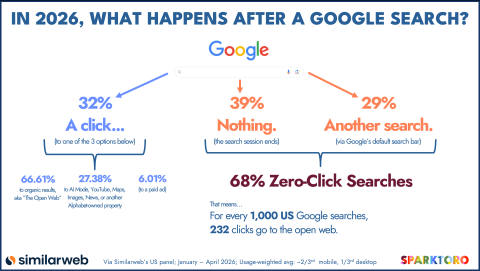
Zero-click searches on Google have surged to 68% in early 2026—up from 60% in 2024—driven primarily by AI Overviews and Google's push to keep users within its ecosystem.
SEOs must shift from tactical execution to strategic leadership to capitalize on AI's disruption of search and the C-suite's newfound attention to search visibility.
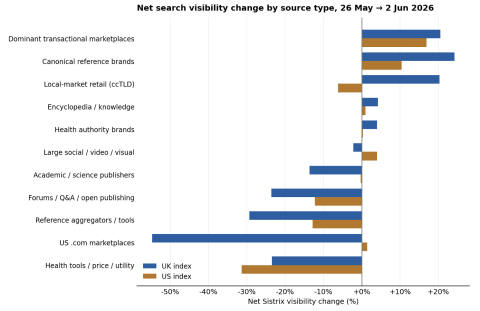
Aleyda Solis's analysis of the May 2026 Core Update reveals that Google prioritized source type fit and user intent over raw authority, causing significant visibility swings across reference brands, forums, ecommerce, and marketplaces.
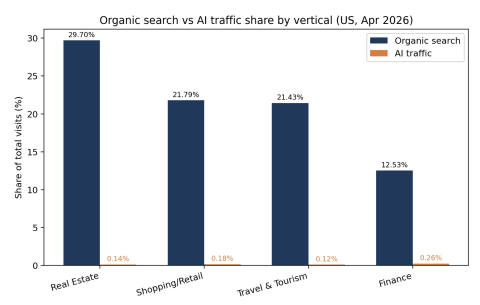
AI traffic remains tiny versus organic search, but AI citations reveal a distinct visibility layer that matters for discovery and evaluation—requiring separate measurement strategies.
Google introduced a new spam policy on April 13, 2026 targeting back button hijacking, a deceptive practice that traps users on sites to boost ad impressions.