Filter topics
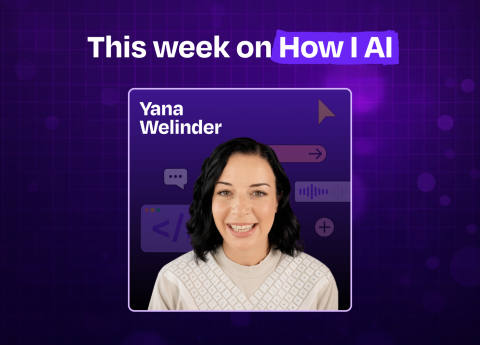
Lenny's Newsletter interviews a solo founder who used ChatGPT and Codex to build an AI-native fashion brand, covering design workflows, e-commerce setup, and AI-human collaboration patterns.
A solo fashion founder leveraged ChatGPT, Codex, and AI tools to design, prototype, and launch an e-commerce brand without hiring engineers.

Google is actively recruiting product managers focused on content automation across two U.S. offices.

OpenAI is previewing Ultrafast mode, which accelerates its GPT-5.6 Sol model 14-fold, targeting enterprise adoption.
Meta leveraged AI analysis to remove 750,000 teen accounts in Australia in compliance with the country's eSafety Commission ban on under-16 users.

Google has updated ad requirements for YouTube and Discover Feed placements.
Grace Clarke, an AI educator, rebuilt her service business entirely on custom Claude Code tools that automated admin work and replaced traditional software.
OpenAI Developer Experience lead Nick Baumann demonstrates ChatGPT Codex's latest voice, automation, and site-building features in a live podcast episode.

Google is testing a new Read Later Queue carousel in its Discover feed that lets users access previously saved articles in one place.
Anthropic's first technical PM discusses the product decisions and development practices that established Claude as a leading AI model.

Bing is testing a blur/fade effect on related search suggestions to highlight the hovered option and reduce visual clutter.

Google is testing rounded corners and white borders on images in the Discover feed, a visual design experiment first spotted by researcher Damien Andell.

OpenAI has added tooltips to ChatGPT Ads Manager that display View-Through Attribution (VTA) and Click-Through Attribution (CTA) conversion values.

Bing is testing an image section within its shopping panel display, spotted by a user but not yet widely replicated.

Google softened its guidance on AI label placement in image ads, moving from a specific 5.5% margin rule to vaguer language about avoiding corners.
Netflix's CPTO Elizabeth Stone argues that systems thinking, not narrow specialization, is the critical skill for managing product teams in an AI-driven era.

OpenAI added geo-targeting exclusion and audience list exclusion features to ChatGPT Ads Manager, continuing its rapid expansion of advertising capabilities.

Google Ads now requires administrators to provide justification when removing user access, with requests sent to other admins for approval.

Google removed an erroneous semicolon from its Google-InspectionTool user agent string documentation that didn't match the actual production value.
Lenny's Newsletter features an interview with AI builder Alex Finn about running a five-computer local AI infrastructure with Claude Code loops to automate software development without cloud subscription costs.
Google announced Barcelona as the 2026 location for Search Central Deep Dive Europe, its annual developer and SEO conference series.

Google Trends has added a new button enabling users to compare keyword interest trends against previous time periods with visual charts.
Google is asking the SEO community to help choose which European city will host the 2026 Search Central Live Deep Dive event.
Meta has enhanced WhatsApp's scam detection system while maintaining the app's privacy-first architecture.
Lenny's Newsletter profiles a builder who uses AI coding assistants like Cursor to prototype physical hardware projects without traditional programming knowledge.
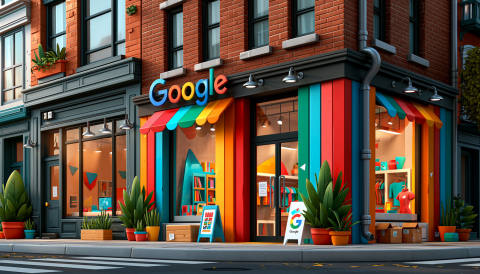
Google is testing a blue background color for the Google Business Profile dashboard interface in Google Search, replacing the previous white background.
Alessio Fanelli demonstrates how to run autonomous coding agents from a mobile device using OpenAI Symphony and Linear, with a live demo of AI finding underpriced Pokémon cards on eBay.

Bing is experimenting with a filled black magnifying glass icon instead of its previous outlined design in the search bar.