Filter topics1/12
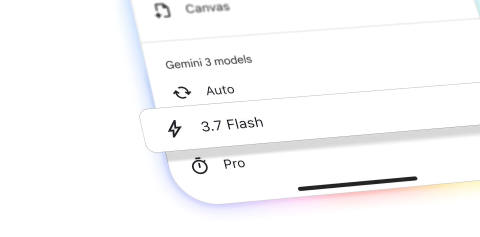
Google is rolling out its latest Gemini 3.7 Flash AI model to Search's AI Mode today for paid Pro and Ultra subscribers globally in English.

Google will automatically migrate legacy Search campaign features to AI Max starting September 1, with Dynamic Search Ads following in February 2027.
Google is retiring manual language targeting in Google Ads next month, automatically routing ad selection via AI instead.
Anthropic's Claude is watermarking AI-generated content, but Ahrefs' research suggests this won't meaningfully impact SEO since Google ranks AI content already.
SERoundtable's weekly recap covers Google's AI home page tests, quality concerns in AI-powered local results, and Meta's web crawling activity that may signal a new search engine project.

Google is rolling out AI-generated images directly in AI Overviews, prompting immediate criticism from content creators over replacement concerns.

SparkToro's founder argues that despite declining direct traffic, websites remain essential as owned-and-controlled hubs for content distribution, AI training, and brand positioning.

SEO professionals need to understand how LLM grounding—the distinction between static training data and real-time web retrieval—affects brand visibility in AI search results.
Meta leveraged AI analysis to remove 750,000 teen accounts in Australia in compliance with the country's eSafety Commission ban on under-16 users.

Shopify has seen AI referrals jump 197%, but organic search still drives the majority of ecommerce traffic.
Google experienced a notable ranking volatility spike over August 12–13, while OpenAI began hiding ChatGPT source links behind additional clicks.

A new study reveals AI sources drive just 1.1% of traffic to news publishers, suggesting minimal direct impact from AI traffic sources at present.
GSQi Blog explains how to identify and organize AI Mode queries using Google Search Console's performance data, APIs, and third-party tools like Analytics Edge and Claude.

Search Engine Land argues that recent SEO visibility gains attributed to AI are largely the result of brands paying off accumulated technical debt rather than benefiting from new opportunities.
Google amended its SerpApi lawsuit to focus on licensed content protection while expanding AI Overviews to local results and rolling out several Merchant Center updates.

Google's AI Overviews for local results are frequently citing self-promotional listicles as primary sources instead of directing users to actual business websites.
Meta's damaged public trust may hinder its ability to execute on AI ambitions despite leadership's strategic vision.
Google has fully rolled out generative AI performance reports in Search Console and is testing new ad features including advertiser summaries and AI dashboard tools.
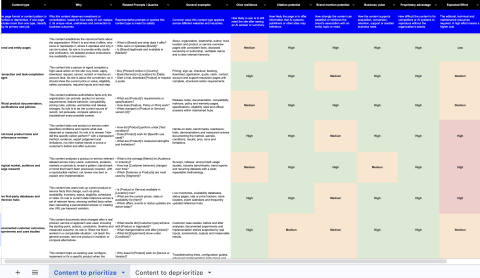
Aleyda Solis presents a content prioritization framework using six dimensions (click resilience, citation potential, brand mention potential, business value, proprietary advantage, and expected effort) to identify which content types remain valuable when AI can answer queries directly.
Moz released a dataset of 50,000 fan-out prompts across 1,000 subtopics, revealing that brand mentions cluster in entity and comparison queries, and that most fan-outs balance topical relevance with diversity.
Moz announced the first five speakers for MozCon London on November 13, 2026, with sessions covering AI search agents, topical content optimization, and agentic e-commerce.
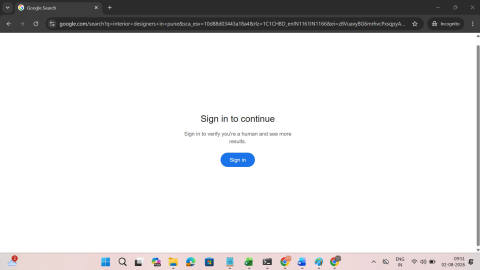
Google is testing a sign-in requirement for searchers to access additional search results, a move that could reshape how users discover and interact with organic content.
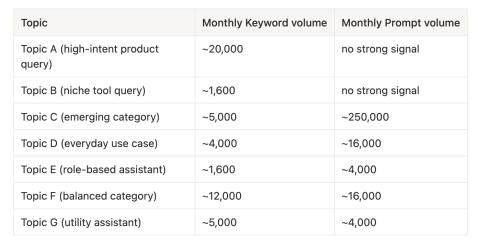
Search Engine Land explores how combining traditional keyword research with prompt research can improve content topic prioritization and planning.
Snapchat is removing wholly AI-generated videos from Spotlight recommendations while preserving human-created and AI-enhanced content.
LinkedIn is testing a feature letting users report posts and comments they believe are AI-generated, while removing its 'enhance your post' AI tool to combat inauthentic activity.
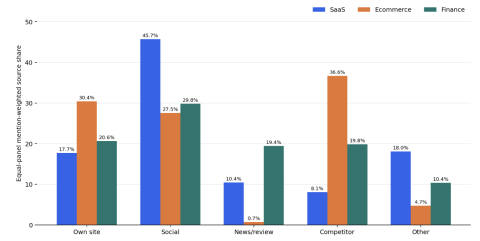
Aleyda Solis's analysis of 15 leading brands shows AI search relies on external sources for 70–82% of top citations, making digital PR and social presence as critical as owned-site content.
Human-written SEO content outperforms pure AI content by up to 8x in ranking potential, as Google's systems increasingly reward originality over scaled output.

SERoundtable recaps Google's platform properties rollout, AI Overview prevalence, and major feature updates to Google Ads, plus moves from Microsoft Ads and ChatGPT.

Search Engine Land reports that AI-driven digital experiences are raising accessibility concerns that could impact organic visibility and user reach.

A new study by geoSurge found that AI models search for familiar brands 3.2 times more often than unfamiliar ones, potentially creating an unfair advantage for established names.
Google is extending its AI-generated description experiment from Search ads to Shopping and Product ads, raising questions about advertiser control and campaign performance.
Data from Similarweb and Semrush shows AI Overviews now display on 43–48% of Google searches, with Google expanding AI features across shopping ads, related searches, and Discover.

Google is testing a "Related searches based on your browsing" feature that may pull from Chrome history beyond traditional search data.
Google is testing AI-generated product descriptions on shopping ads, extending an experiment that already frustrated advertisers worried about click-through rate effects.
AI Overviews now appear in roughly 43–48% of Google searches, climbing sharply from 15% a year earlier, with informational queries seeing even higher adoption.

Google responded to criticism of inconsistent AI Overview responses on race-related queries by deflecting blame to source websites rather than acknowledging responsibility for the AI-generated answers.
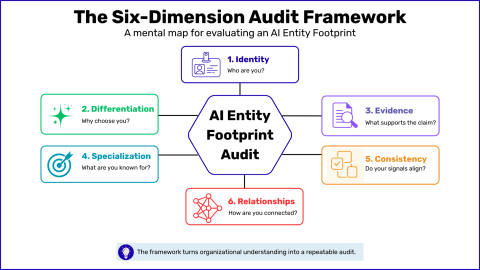
Search Engine Land outlines how to audit your AI entity footprint—the collective digital signals that shape how AI systems understand your business.
Ahrefs analyzed 331,000 ranking pages and found that 5.3% of top-3 results are fully AI-generated, suggesting Google penalizes poor content quality regardless of origin, not AI use itself.
A landscaping-focused agency tested whether adding LocalBusiness schema markup boosts rankings in a controlled 10-week study across 29 clients and multiple search engines.
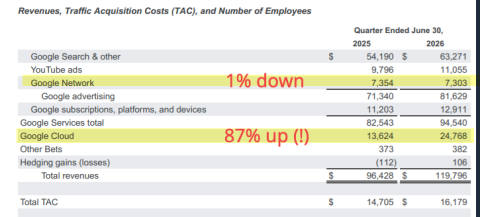
Google's search ad revenue jumped 17% in Q2, but investors remain uneasy about the company's mounting AI expenditures and their impact on profitability.
Google is shifting search from an information engine to an agent-driven system, with Gemini Flash-Lite powering improved AI Overviews and upcoming integrations with shopping and app functionality.

Google continues rolling out AI features across Merchant Center, adding dashboard summaries, search suggestions, and chat history access.
As LLMs reshape search results, Moz breaks down four new SEO tactics—digital PR, barnacle SEO, and more—that prioritize third-party citations over traditional links.

Google's AI Max is now live with 500,000+ advertisers and is turning complex, previously unmonetized searches into ad inventory through improved intent matching.
Meta has invested hundreds of billions in AI infrastructure, but the company's history of failed internal projects and lack of evidence that AI delivers promised ROI raises serious questions about whether the gamble will succeed.
Google is restructuring search to mimic creator platforms, prioritizing influence and guided discovery over traditional rankings and clicks.
Google's Q2 2026 search ad revenue grew 14.5% to $81.6 billion, driven by AI Overviews and AI Mode adoption.
Search Engine Land examines whether topical authority remains a critical ranking factor as AI transforms search results.