Optimixed Search News

Travel websites need feed management and entity optimization, not standard SEO playbooks

72
AnalysisOpinion

TLDR

Travel SEO success depends on feed management, entity optimization, and modular content rather than traditional ranking tactics because Google's travel SERPs are dominated by its own tools, not organic listings.

Search Engine Land breaks down why conventional SEO strategies backfire for travel brands, arguing that the industry's unique SERP environment—where Google owns the transactional space through hotel centers, interactive search tools, and visual aggregators—requires abandoning generic playbooks in favor of feed management, real-time data integration, and structured content components that function as interactive tools rather than long-form prose.
Was this useful?
Share

Related articles

SparkToro's founder argues that despite declining direct traffic, websites remain essential as owned-and-controlled hubs for content distribution, AI training, and brand positioning.

Content & StrategySEO News & Algorithm UpdatesAI & Machine Learning in SEO55
Opinion

B2B organic traffic can rank well but fail to drive actual customer consideration, requiring a strategic rethink beyond click metrics.

Content & StrategySEO News & Algorithm UpdatesAnalytics & Measurement45
Opinion

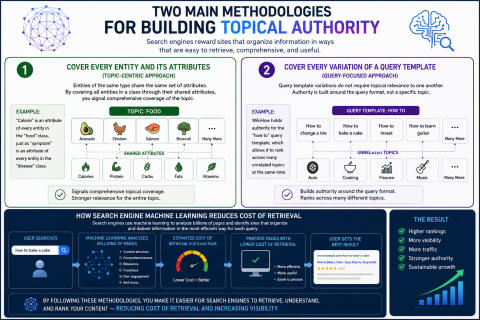
Query templates help expand topical authority by systematically covering related search queries within a subject area.

Content & StrategyTechnical SEOSEO News & Algorithm Updates45
Guide

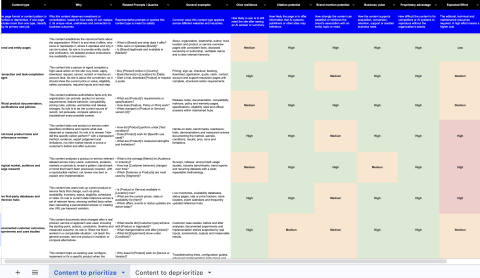
Aleyda Solis presents a content prioritization framework using six dimensions (click resilience, citation potential, brand mention potential, business value, proprietary advantage, and expected effort) to identify which content types remain valuable when AI can answer queries directly.

Content & StrategyAI & Machine Learning in SEOSEO News & Algorithm Updates72
Guide